
九年级上册 · UNIT 2
On the money
课件总结 · 待教师审核。听力原题答案尚待配套音频核实。
Unit 2|主题与阅读地图
教材p18—24|A dog called Money:p20—21
目标:理解“目标—预算—选择”;用when安排时间、where说明地点;区分礼物的价格与情感价值。
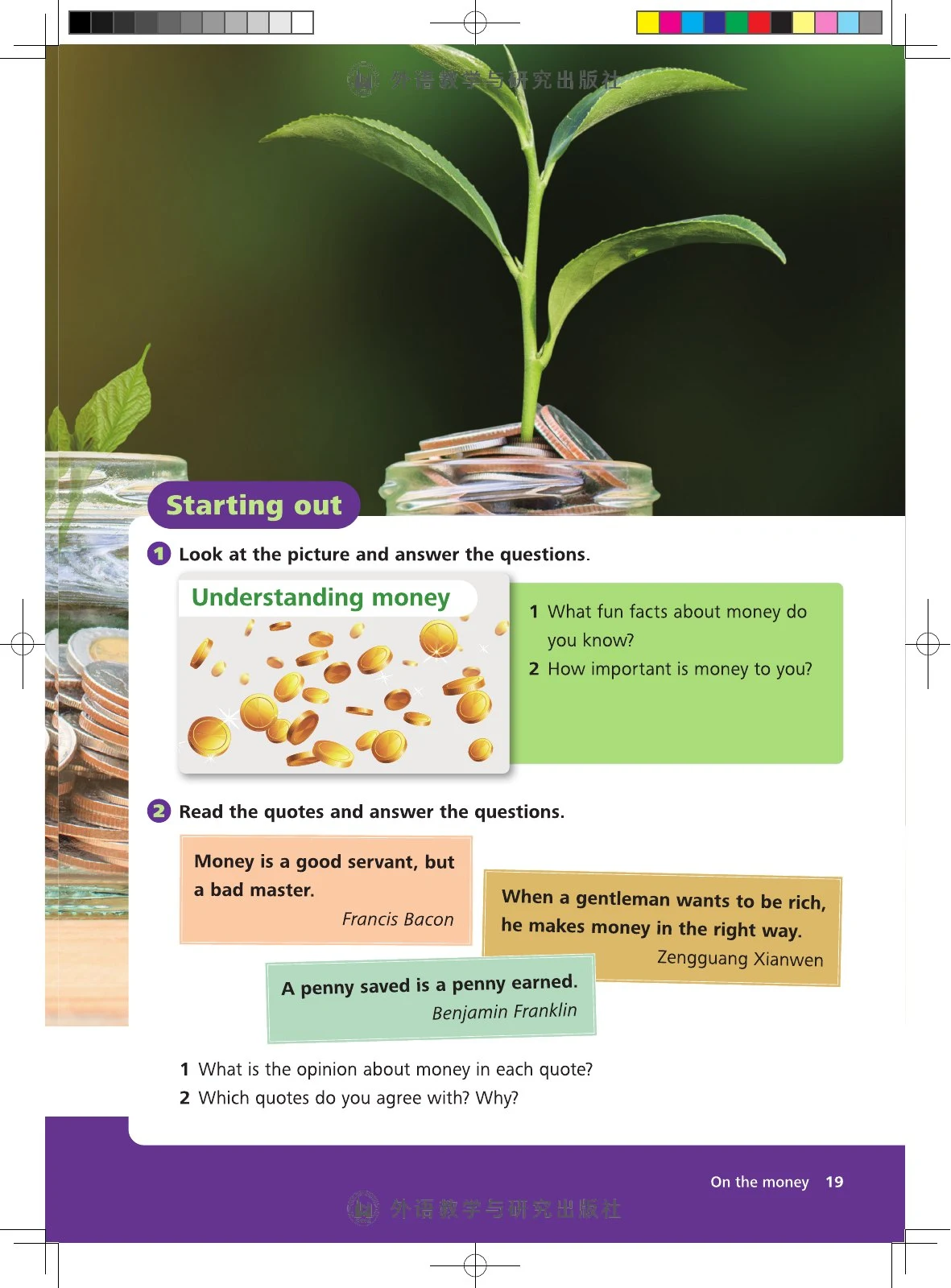
导入p19:钱可以提供帮助,也可能控制人的选择。“省钱”和“挣钱”相关但不完全相同;讨论要说明理由,不要求所有家庭使用同一预算。
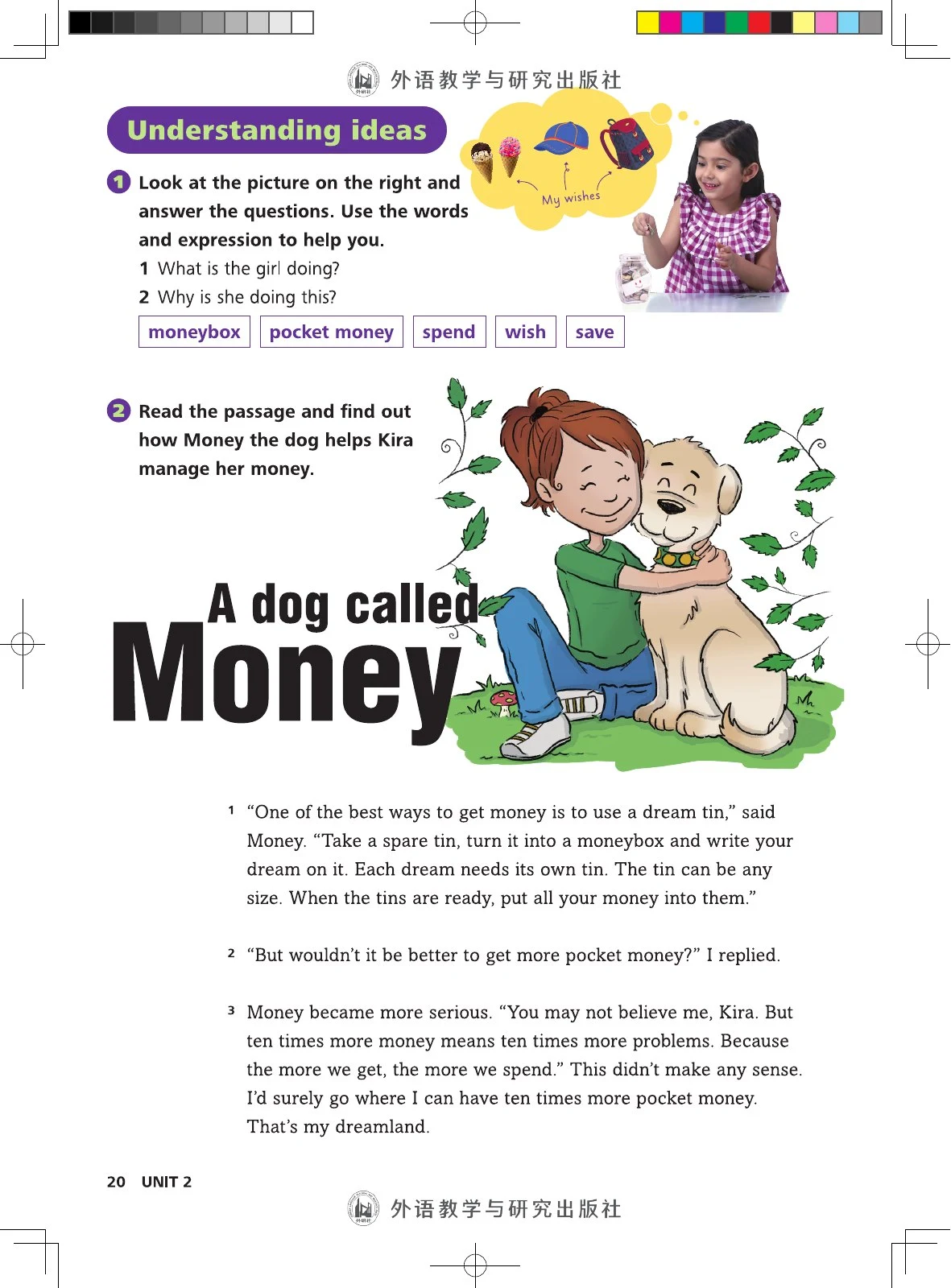
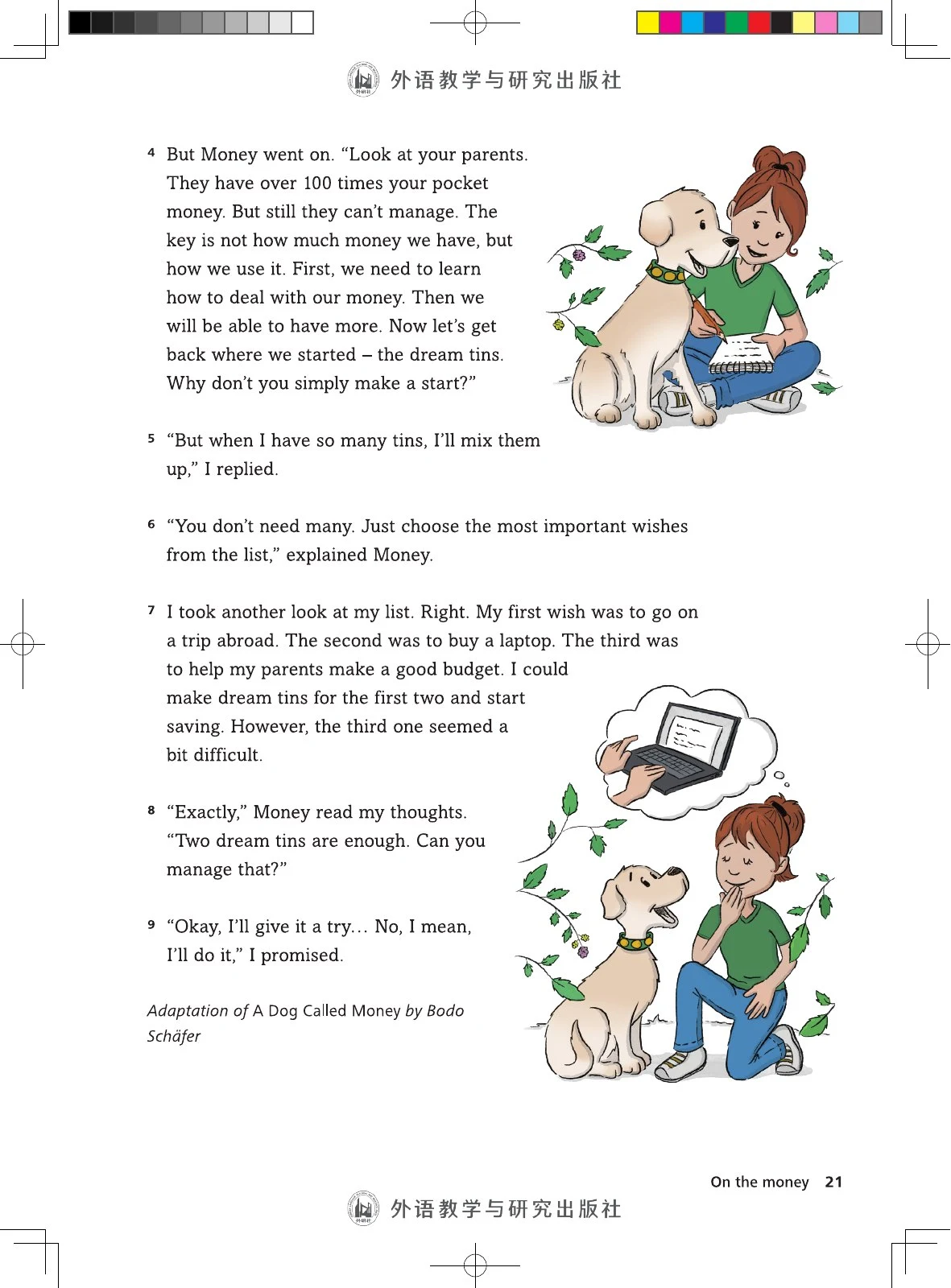
主课文是故事节选:①Money提出梦想储蓄盒;②Kira认为多些零花钱会更好;③Money用父母的情况反问,强调管理;④Kira选择重要愿望;⑤两个目标盒已经够用,她决定行动。
论证链:提出想法→质疑“钱多就够”→举例→明确目标→开始实施。故事中的“钱多十倍、问题也更多”是人物的劝说表达,不是适用于所有家庭的数学规律。
阅读记录:Kira原先的想法____;Money的观点____;两个优先愿望____。
你的理由:为什么一次追逐太多愿望可能难以坚持?
______________________________________________________
生活应用:写下一个你自己的学习目标。要花多少钱?是否真的需要购买?有没有借用、等待或替代办法?
Unit 2|五栏词汇 1—11
教材词表p139—140|音标随教材;例句原创
| 单词/词组 | 音标 | 词性 | 中文意思 | 英语例句 |
|---|---|---|---|---|
| tin (p20) | /tɪn/ | n. | 金属盒 | Put a label on each tin. |
| spare (p20) | /speə/ | adj. | 备用的;多余的 | We used a spare box to save money. |
| moneybox (p20) | /ˈmʌnibɒks/ | n. | 储钱盒 | My moneybox is almost full. |
| own (p20) | /əʊn/ | adj. | 自己的 | I have my own savings plan. |
| size (p20) | /saɪz/ | n. | 大小;尺寸 | The size of the tin does not matter. |
| better (p20) | /ˈbetə/ | adj. | 更好的 | A clear plan can lead to better choices. |
| make sense (p20) | — | 词组 | 有道理;解释得通 | Your idea makes sense. |
| dreamland (p20) | /ˈdriːmlænd/ | n. | 梦境;理想世界 | The story takes us to a dreamland. |
| manage (p21) | /ˈmænɪdʒ/ | v. | 成功应付;得以对付 | She is learning to manage her money. |
| key (p21) | /kiː/ | n. | 关键 | Practice is the key to progress. |
| deal (p21) | /diːl/ | v. | 处理;应对 | We must deal with this problem. |
学习:先读词→读例句→遮中文说义→遮英文拼写。词组音标标“—”,不编整串读音。
自测:选2个词各造一句;复数、动词变化另查词形。
1. ____________________________________________________
2. ____________________________________________________
Unit 2|五栏词汇 12—22
教材词表p139—140|音标随教材;例句原创
| 单词/词组 | 音标 | 词性 | 中文意思 | 英语例句 |
|---|---|---|---|---|
| deal with (p21) | — | 词组 | 处理;应付 | A plan helps us deal with unexpected costs. |
| laptop (p21) | /ˈlæptɒp/ | n. | 笔记本电脑 | He saves money for a laptop. |
| budget (p21) | /ˈbʌdʒɪt/ | n. | 预算 | We made a budget for the trip. |
| exactly (p21) | /ɪɡˈzæktli/ | adv. | 正是;不错 | That is exactly what I mean. |
| pleasure (p22) | /ˈpleʒə/ | n. | 愉快;满足 | Reading gives me great pleasure. |
| end (p22) | /end/ | n.; v. | 最后部分;结束 | This is the end of the story. / The lesson ends at five. |
| save (p22) | /seɪv/ | v. | 储蓄;存钱 | I save five yuan every week. |
| bank (p23) | /bæŋk/ | n. | 银行 | There is a bank near the station. |
| account (p23) | /əˈkaʊnt/ | n. | 账户 | An adult can help you understand a bank account. |
| expensive (p23) | /ɪkˈspensɪv/ | adj. | 昂贵的 | The coat is too expensive for my budget. |
| price (p23) | /praɪs/ | n. | 价格 | Check the price before you buy it. |
学习:先读词→读例句→遮中文说义→遮英文拼写。词组音标标“—”,不编整串读音。
自测:选2个词各造一句;复数、动词变化另查词形。
1. ____________________________________________________
2. ____________________________________________________
Unit 2|五栏词汇 23—33
教材词表p139—140|音标随教材;例句原创
| 单词/词组 | 音标 | 词性 | 中文意思 | 英语例句 |
|---|---|---|---|---|
| savings (p23) | /ˈseɪvɪŋz/ | n.复数 | 积蓄;储蓄金 | Her savings are growing slowly. |
| make ends meet (p24) | — | 词组 | 使收支相抵;勉强维持生计 | The family works hard to make ends meet. |
| date (p24) | /deɪt/ | n. | 日期 | Write the date in your spending diary. |
| sale (p24) | /seɪl/ | n. | 出售;销售 | The shop has a sale this week. |
| on sale (p24) | — | 词组 | 出售;减价出售 | These notebooks are on sale today. |
| T-shirt (p24) | /ˈtiːʃɜːt/ | n. | T恤衫 | I do not need another T-shirt. |
| website (p26) | /ˈwebsaɪt/ | n. | 网站 | The school website has the event details. |
| worth (p29) | /wɜːθ/ | adj. | 值……钱 | The book is worth twenty yuan. |
| dollar (p29) | /ˈdɒlə/ | n. | 美元 | She had only one dollar left. |
| cent (p29) | /sent/ | n. | 分;美分 | One dollar equals one hundred cents. |
| penny (p29) | /ˈpeni/ | n. | 一分钱硬币 | She put a penny into the tin. |
学习:先读词→读例句→遮中文说义→遮英文拼写。词组音标标“—”,不编整串读音。
自测:选2个词各造一句;复数、动词变化另查词形。
1. ____________________________________________________
2. ____________________________________________________
Unit 2|五栏词汇 34—40
教材词表p139—140|音标随教材;例句原创
| 单词/词组 | 音标 | 词性 | 中文意思 | 英语例句 |
|---|---|---|---|---|
| couple (p29) | /ˈkʌpəl/ | n. | 一对夫妻;情侣 | The couple care about each other. |
| flat (p29) | /flæt/ | n. | 一套住房 | They live in a small flat. |
| treasure (p29) | /ˈtreʒə/ | n. | 珍宝;珍品 | The old watch is his greatest treasure. |
| Christmas Eve (p29) | — | 词组 | 圣诞前夕 | The story takes place on Christmas Eve. |
| certainly (p29) | /ˈsɜːtənli/ | adv. | 当然 | You can certainly ask for help. |
| chain (p29) | /tʃeɪn/ | n. | 链子;链条 | The chain was a gift for his watch. |
| comb (p29) | /kəʊm/ | n. | 梳子 | She bought a new comb. |
学习:先读词→读例句→遮中文说义→遮英文拼写。词组音标标“—”,不编整串读音。
自测:选2个词各造一句;复数、动词变化另查词形。
1. ____________________________________________________
2. ____________________________________________________
Unit 2|词组、比较与钱的表达
教材p20—24、p29
manage money管理钱;deal with处理;the key to + 名词/动名词:the key to saving;of one’s own属于某人自己的;mix up混淆;make sense有道理;make ends meet收支相抵。
price高/低:a high/low price;东西贵/便宜:an expensive/cheap coat。不说an expensive price。
be worth + 金额:The book is worth 20 yuan. worth前有be;本义不加of。
save money存钱;savings积蓄(复数形式);spend money on sth / spend money doing sth。
I spent ten yuan on the book. / I spent ten yuan buying the book.
本课better是good的比较级。more money不必然等于better management。
can be of any size:of + 名词短语表示特征,可理解成“大小不限”。
辨析自测:
1. The coat is ____ (expensive/high). Its price is ____ (expensive/high).
2. She spent five yuan ____ a notebook.
3. This plan makes ____ (sense/senses).
4. The key to ____ (save) is to start small.
Unit 2|when:给行动安排时间
教材p23;语法参考p130—131
观察(原创):When I get pocket money, I save some of it.
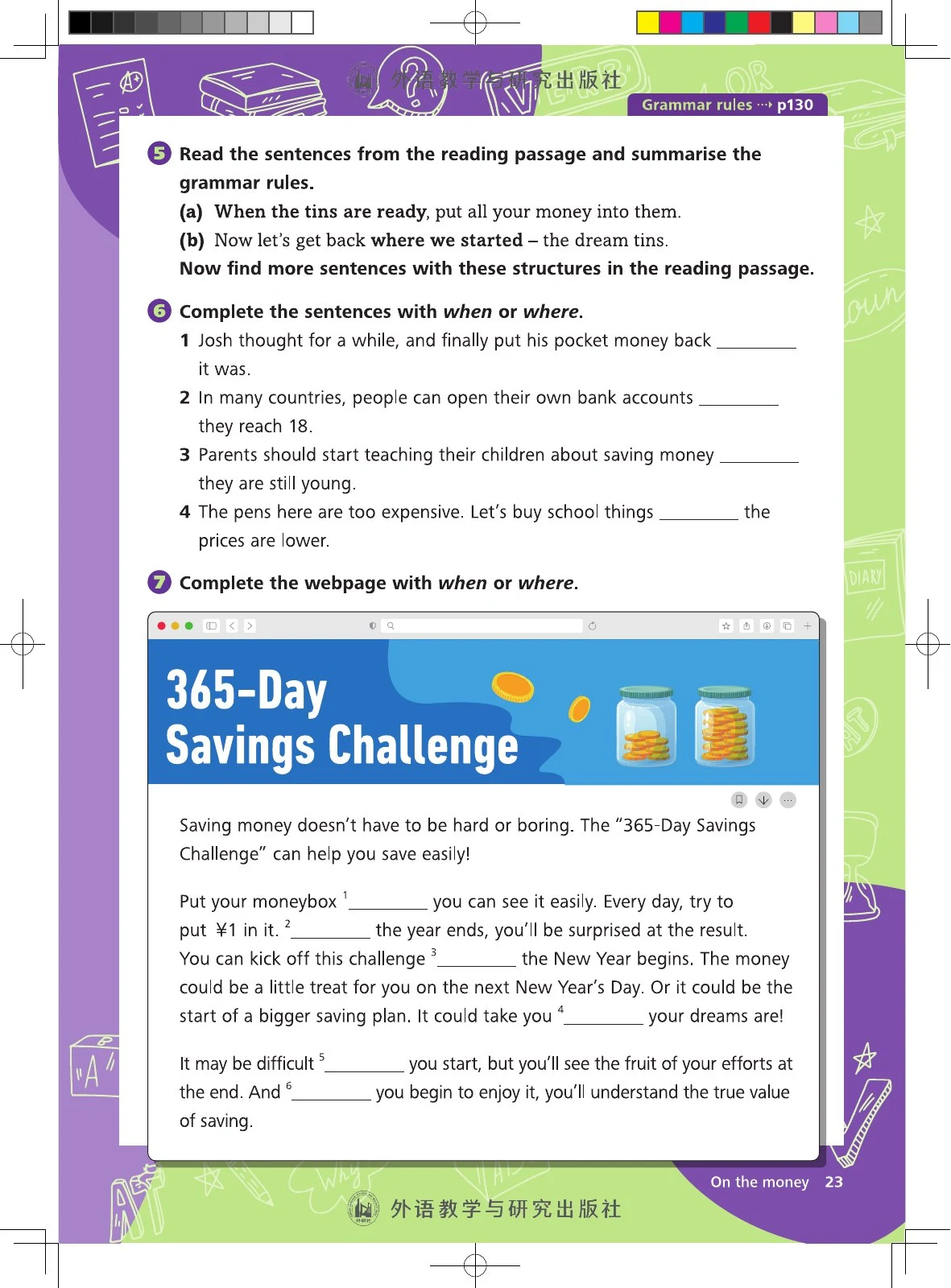
when从句回答“什么时候”。这是习惯:拿到零花钱时存一部分。
将来计划:When I get my pocket money tomorrow, I will make a plan.
时间从句通常用一般现在时表达将来,主句用将来时。不要把will重复放到when从句里。
过去叙事:When she got home, she found a gift.
不是所有when句都用“主将从现”;先看句子谈习惯、过去还是将来。
对比if:If he comes, I will talk to him.(是否来尚不确定)
When he comes, I will talk to him.(以他到来为时间点)
两者都可表达将来;选择取决于你要强调条件还是时间。
即时练习:
1. When I ____ (get) home tomorrow, I will call you.
2. When I ____ (be) seven, I learned to save money.
3. 用when合并:I get pocket money. I record it.(习惯)
______________________________________________________
Unit 2|where:说明行动发生的地方
教材p23;语法参考p131
观察(原创):Keep the tin where you can see it.
把盒子放在你能看见的地方。where从句补充地点,回答“放在哪里”。
地点从句:We can read where it is quiet.
对照:We can read in a quiet room. 后者是介词短语,不是从句。
基础辨别:when问时间;where问地点;because问原因;if问条件。
不要只凭“后面看起来像时间/地点”猜:先读整句,看前后关系。
拓展边界:I know where the bank is. 中where从句是know的宾语,表示“我知道银行在哪里”,不是地点状语从句。这个区别用于理解,不当成本课新增重点。
即时练习:
1. Put your spending diary ____ you can find it easily. (when/where)
2. ____ you receive money, write it down. (When/Where)
3. 原创造句:把钱放在安全地方。用where。
______________________________________________________
家长提问:“这个从句是在回答时间,还是地点?”让孩子先用中文回答,再选择连接词。
Unit 2|听说与预算建议
教材p24—27|听力原题待核实
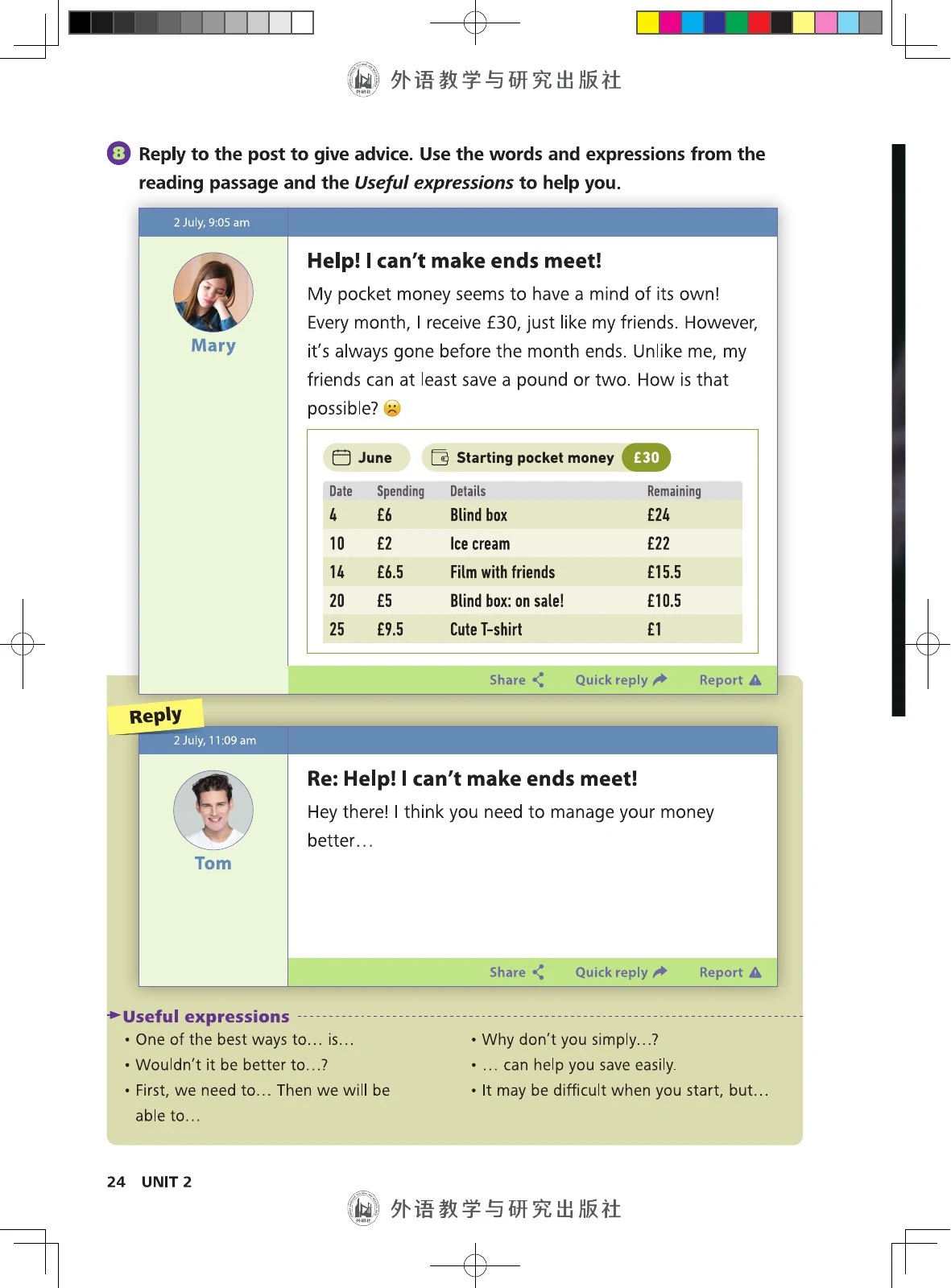
p24 Mary的消费:原有£30,花费£6、£2、£6.50、£5、£9.50;共£29,剩£1。不要把“快不够用”误写成数学上的“已经为零”。
建议步骤:先记录→分清需要与想要→预留储蓄→再决定是否购买。两个盲盒共£11;是否值得要结合她的目标,不给孩子贴“乱花钱”的标签。
写建议(原创任务):给Mary写3句,至少含when、where各一句。
______________________________________________________
______________________________________________________
______________________________________________________
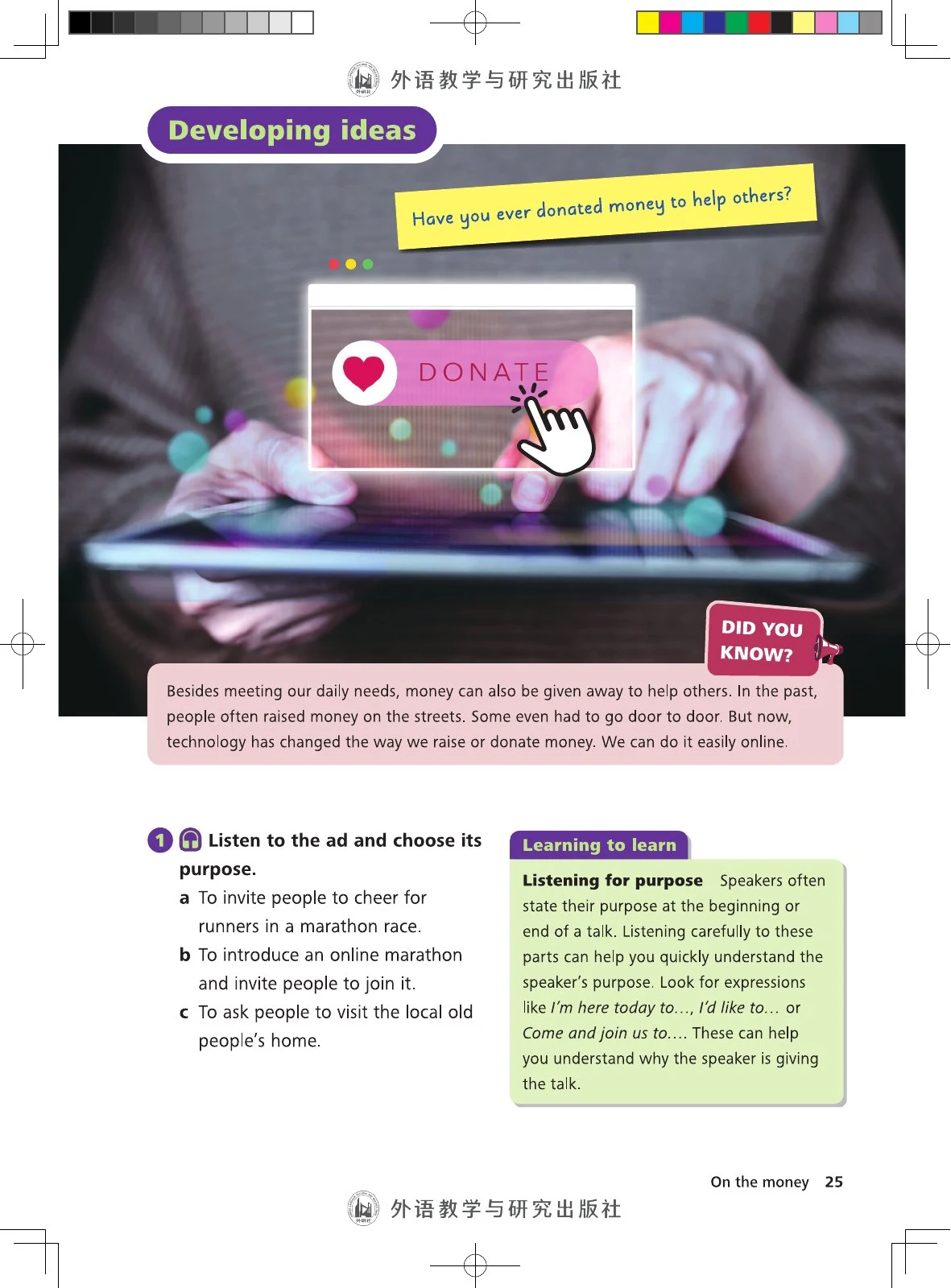
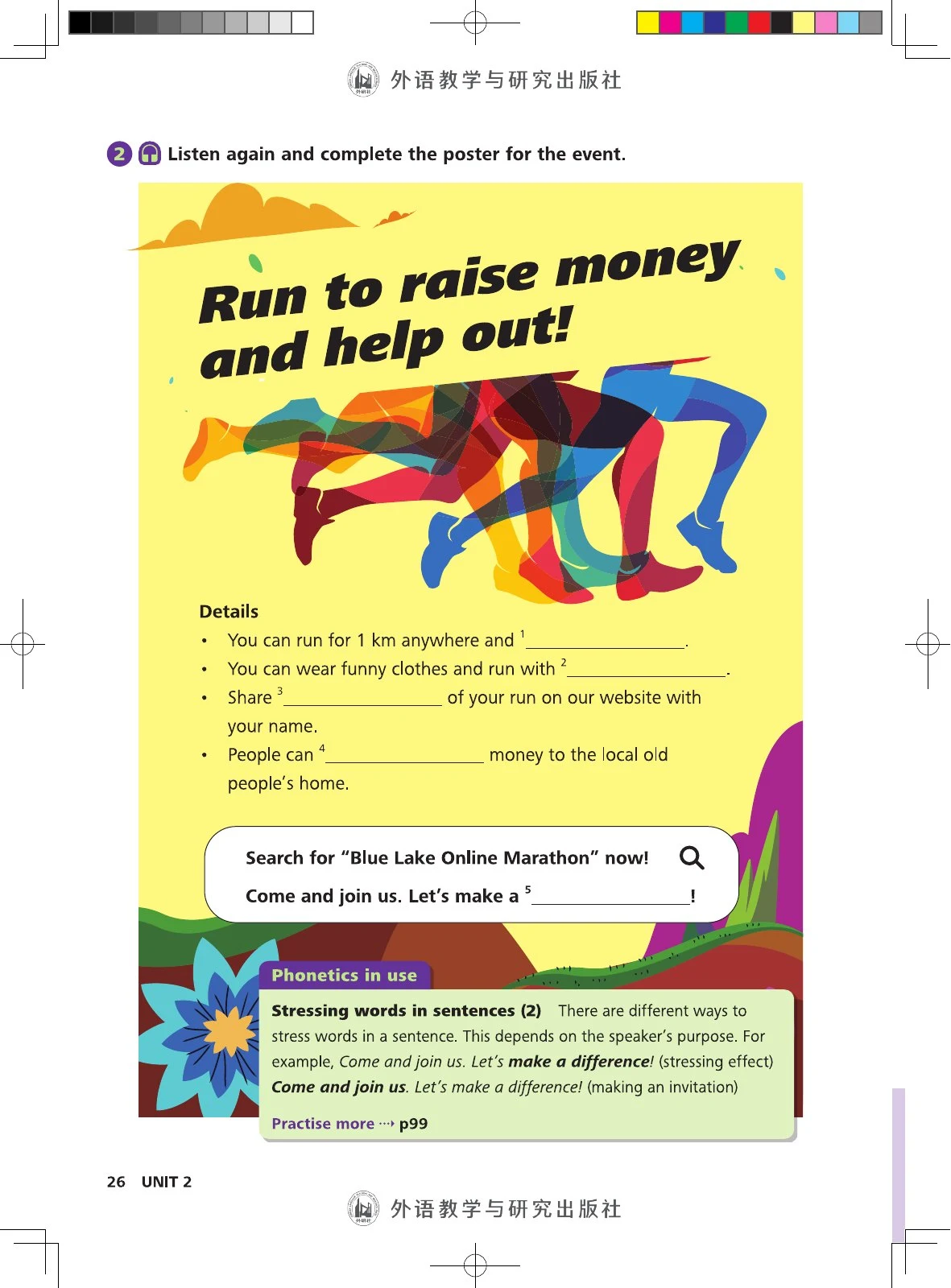
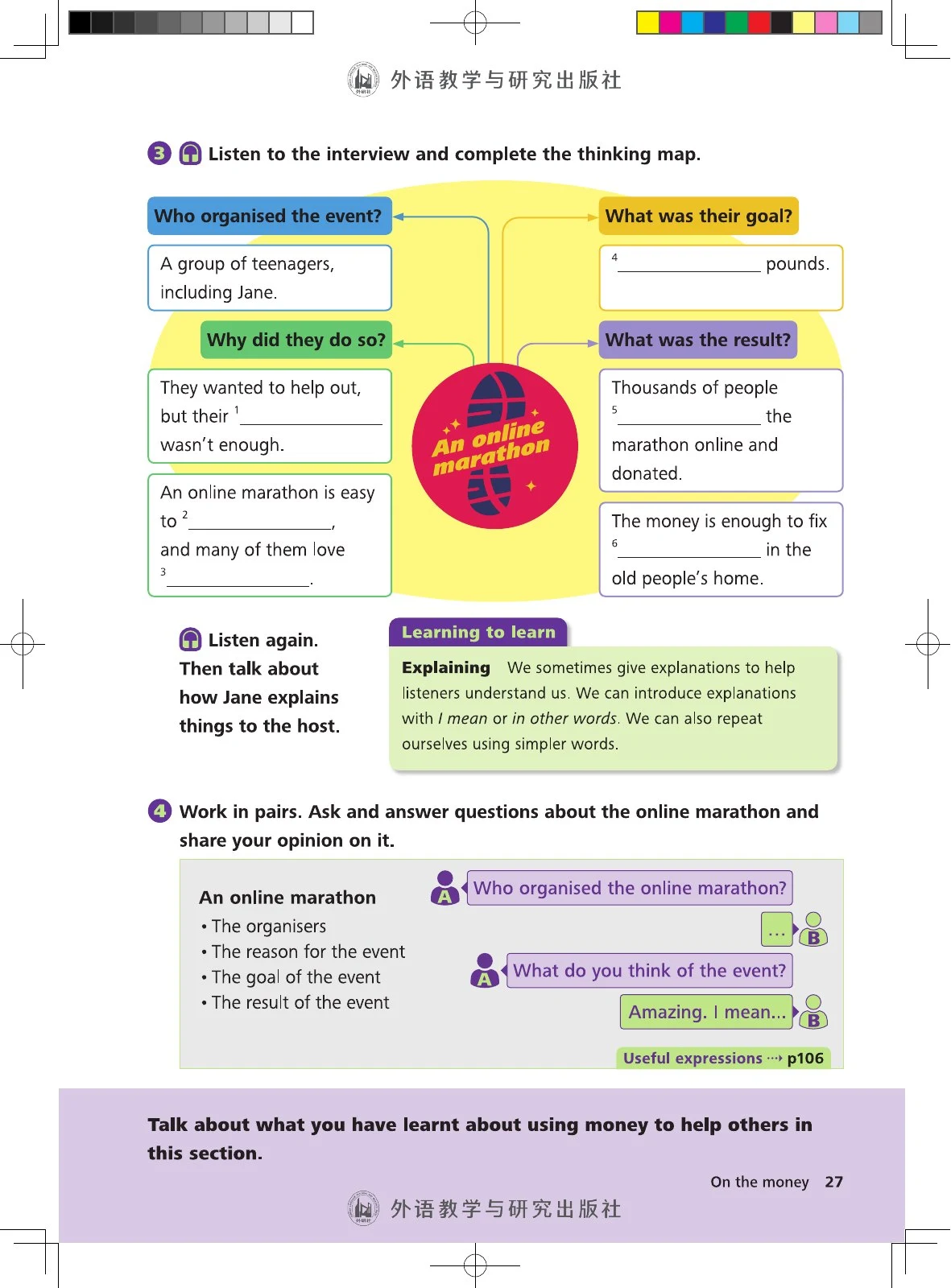
p25—27 An online marathon:先识别活动目的、参加方法、筹款去向。宣传海报与采访题需要录音,不能凭常识把donate、difference等填进去当标准答案。
听前预测表:空格题号____;需要:□数字 □动作 □人物 □地点
听到的信息____;对应音频文件____;时间点____。
解释观点可用:I mean…(我的意思是……) / In other words,…(换句话说……)。给出解释后仍需事实或例子。
Unit 2|礼物的价格与价值
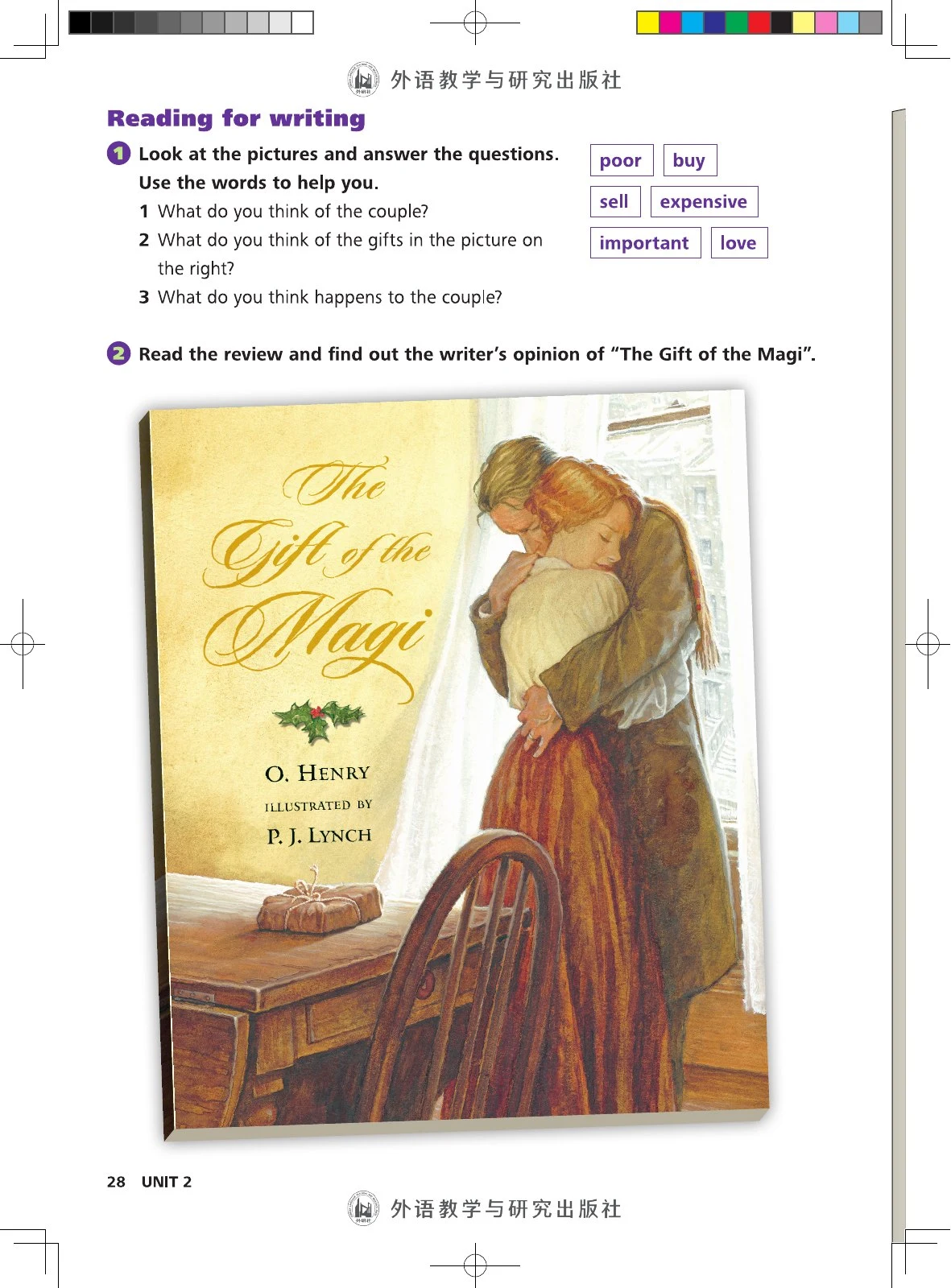
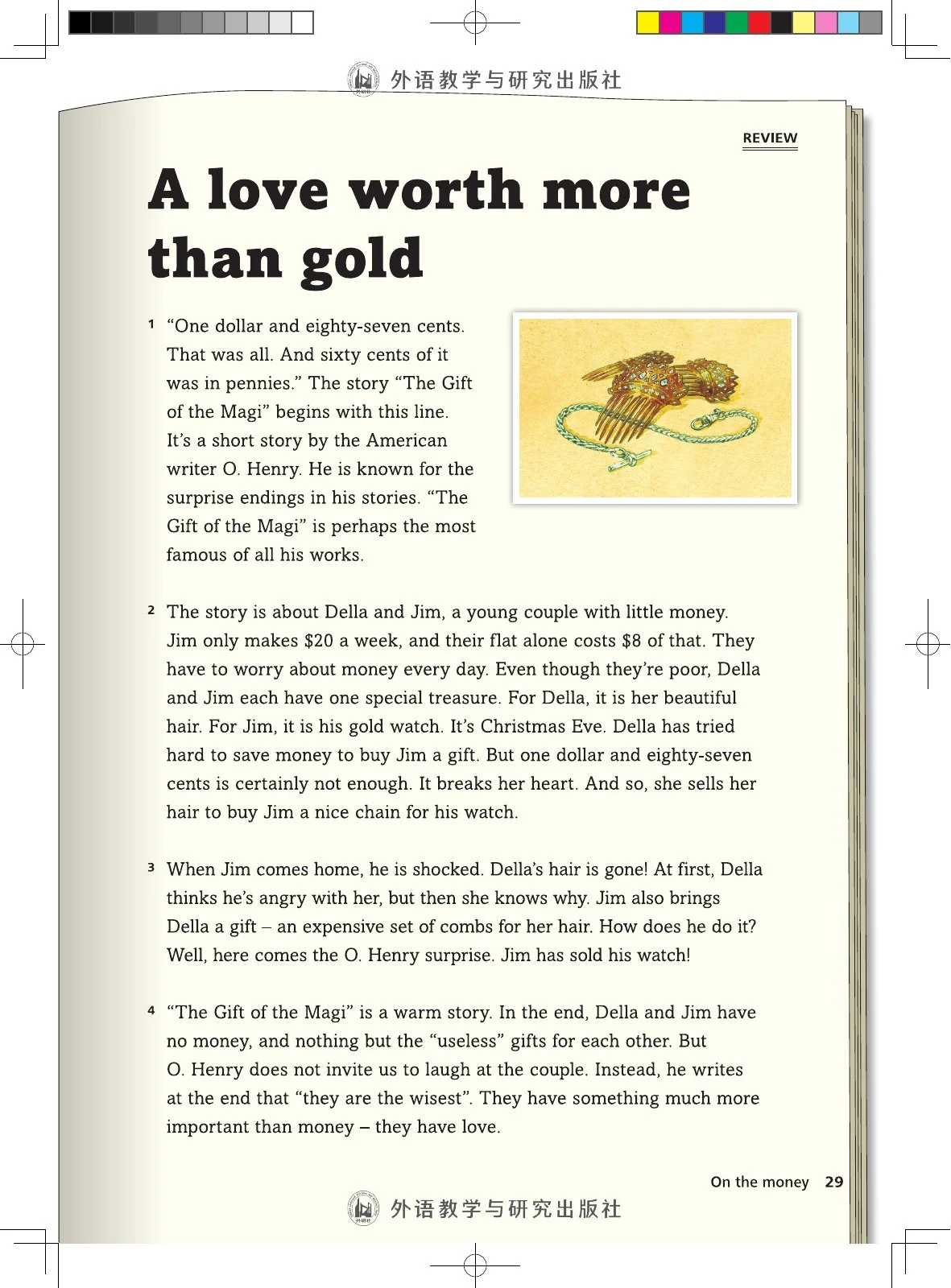
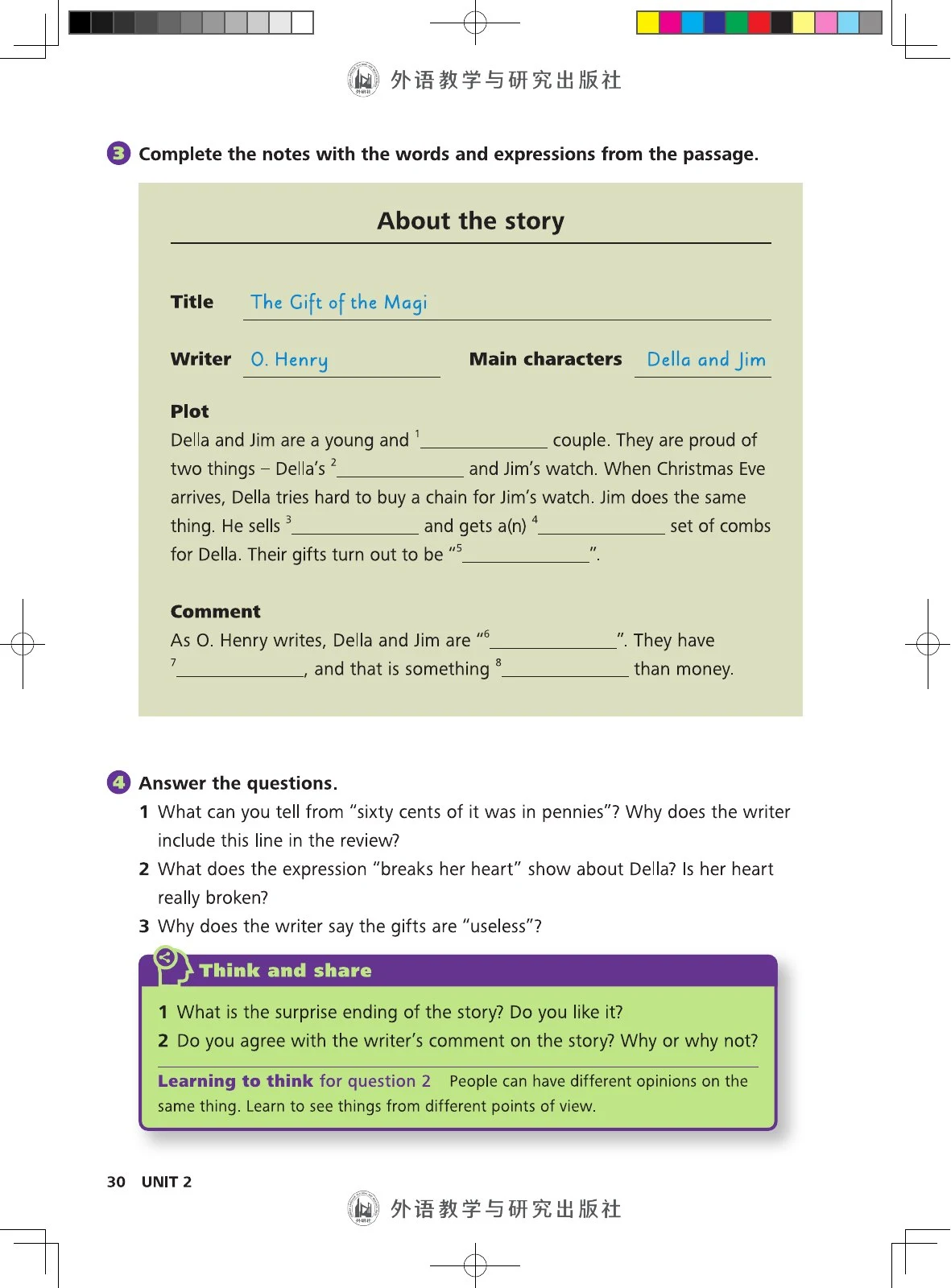
教材p28—31|A love worth more than gold
作品关系:教材读的是对The Gift of the Magi的书评,不等于整篇原著。先分清故事情节与书评作者的评价。
情节:Della钱很少→卖长发为Jim买表链;Jim卖手表为Della买梳子→礼物暂时失去实用对象→双方的爱仍然可贵。
证据:小额积蓄表现生活困难与准备礼物的不易;头发和手表是双方珍视的东西。
反转:礼物各自配套的东西恰好被卖掉。不能说“礼物毫无意义”;实用价值和情感价值是两个判断维度。
句子理解:break one’s heart是“使某人心碎/伤心”,不是心脏真的破碎。
比较:more important than…比……更重要;worth more than gold用价值比较突出情感。
思考:如果你赞同“他们很明智”,用爱与牺牲作证据;如果你认为需要更好沟通,也要先准确说明情节,尊重文本评价与个人观点的区别。
动笔:Della gave up ____ to buy ____. Jim gave up ____ to buy ____.
我对礼物的看法(观点+情节证据):________________________
Unit 2|完成自己的计划与书评
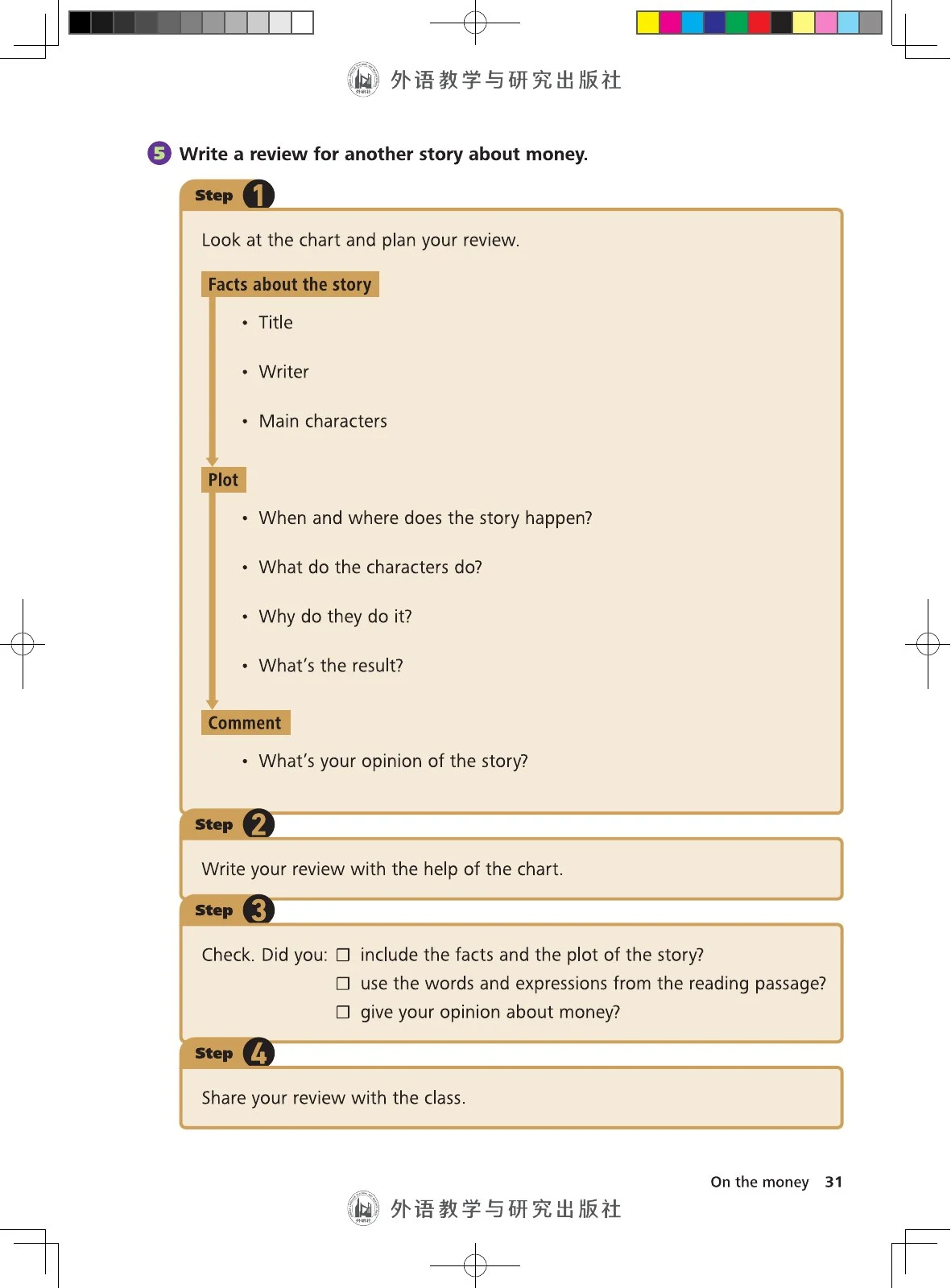
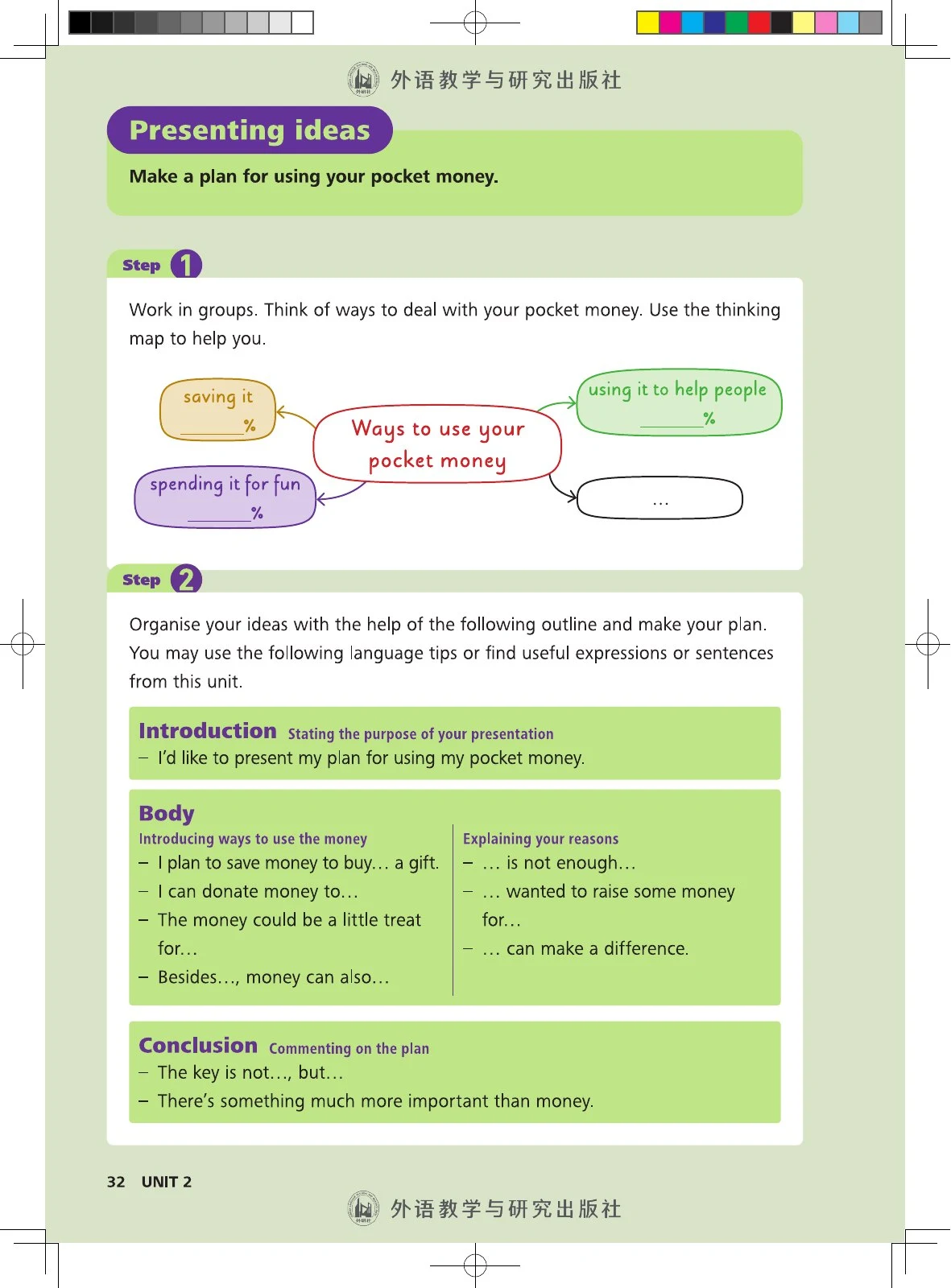
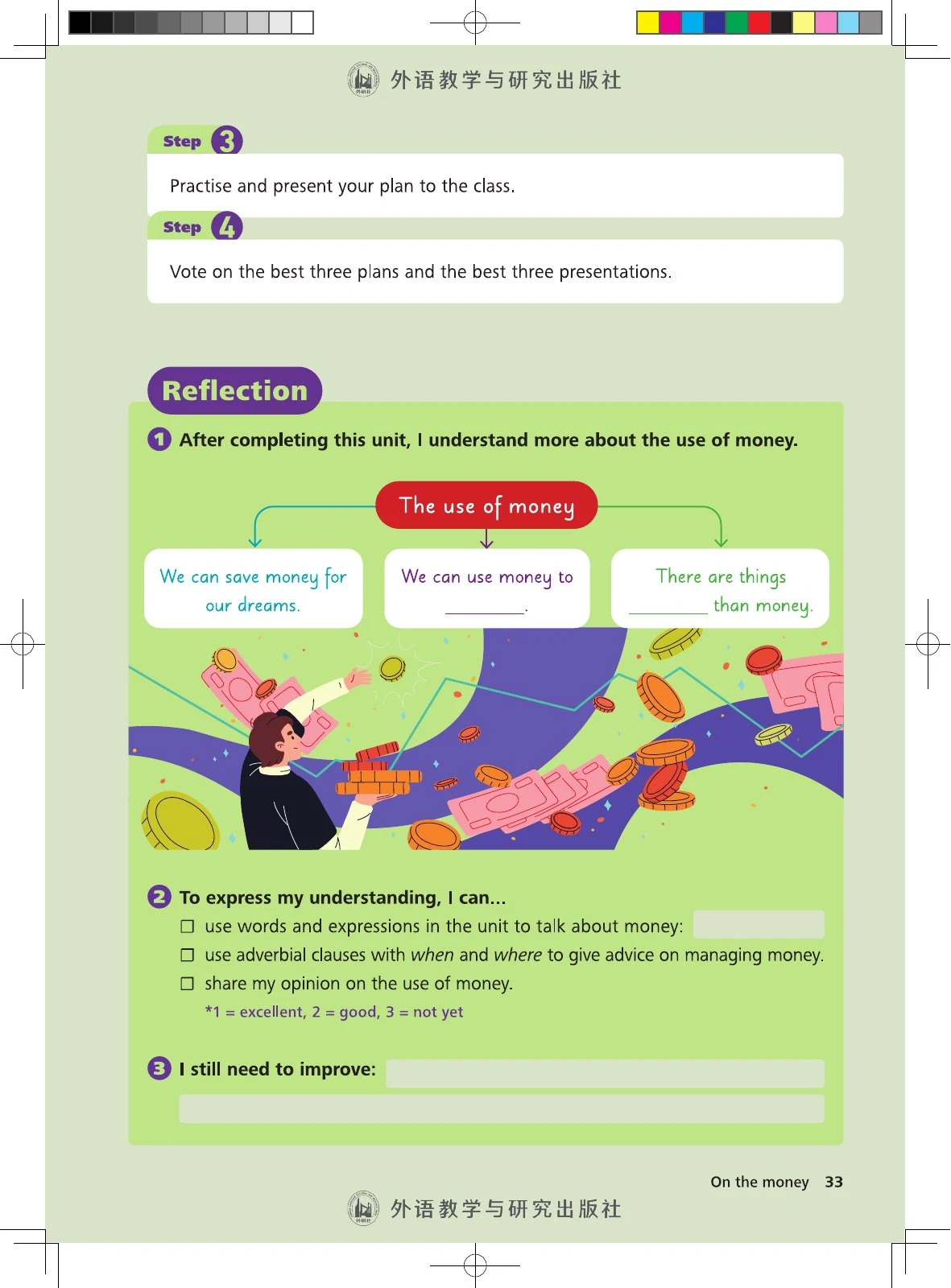
教材p31—33
书评顺序:作品名称与作者→故事主要冲突(不虚构没读到的内容)→喜欢或疑惑的地方→自己的理由。可写教材已读过的A Dog Called Money节选。
预算任务(原创练习):假设本月可支配零花钱100元。填储蓄____、帮助他人____、娱乐____、其他____。合计必须100元。家庭没有零花钱也可做“假设预算”,不比较家庭收入。
写一段计划,至少含一个when和一个where:
My plan: ______________________________________________
______________________________________________________
______________________________________________________
______________________________________________________
评价:□金额相加正确 □目标具体 □有预留 □能说出一次取舍 □when/where用途准确 □计划在自己的权限内。
自我反思:我以前____;现在我会____;一周后用____检查是否做到。
复习安排:今天订正→明天遮答案重做→一周后用新情境再造句。
Unit 2|原创巩固题
先独立完成;答案在家长册
A 填空与选择
1. When I ____ (get) paid tomorrow, I will save some money.
2. Put the moneybox ____ you can see it. (where/when)
3. When she ____ (arrive) yesterday, we started the meeting.
4. This bag is ____. Its price is ____. (high/expensive)
5. He spent ten yuan ____ the ticket. (on/in)
6. My savings ____ growing. (is/are)
7. The key to ____ (manage) money is making choices.
8. The book is worth twenty yuan.(翻译)
B 改错与合句
9. When I will receive the money, I will make a plan.
10. Put it in where you can find it.(只保留where从句表达地点)
11. I will record it. I receive pocket money.(用when,表达将来)
12. It is quiet there. We can study there.(用where合句)
C 生活与阅读
13. 原有80元,花12.5元和27.5元,存20元;可用余额多少?
14. Della卖了什么?Jim卖了什么?
15. 为什么礼物“不能按原计划使用”不等于“没有价值”?
D 输出
16. 写3句消费建议,用when、where、because各一次。
______________________________________________________
______________________________________________________
______________________________________________________